How to Pick a Sectional That Works for a North Georgia Open Floor Plan
Here in North Georgia, open floor plan living isn't a trend. It's just how homes are built. From Ringgold to Calhoun to the newer subdivisions spreading out toward Cartersville and Kennesaw, the open-concept layout has become the standard. Kitchen flows into dining, dining flows into living, and suddenly you're standing in a 600-square-foot stretch of connected space wondering how on earth one sectional sofa is supposed to anchor it all without swallowing the room or getting lost in it.
Getting this right takes a little more thought than picking what looks good in a showroom photo. Here's what actually matters when you're choosing a sectional for an open-concept Georgia home.
Grab a Tape Measure Before You Fall in Love
This sounds obvious, but it's the step most people skip. In an open floor plan, the "living room" doesn't have four walls defining it. That means you're responsible for creating the boundary yourself, and the sectional is the primary tool for doing that.
Start by mapping out the zone where the sofa will live. Then consider three numbers:
The footprint. How wide and deep is the space you're actually allocating? A sectional that looks right might run 110 inches on one side and 90 on the return. In a tight zone, that eats your walkway. Aim to leave at least 36 inches of clearance on all sides for comfortable traffic flow, and closer to 48 inches if you have kids, pets, or frequent company.
The ceiling height. North Georgia homes tend toward high ceilings in newer builds. A low-profile, tight-back sectional reads well in a modern farmhouse with vaulted ceilings. A deep, high-back sectional can feel imposing in the same space. Match the visual weight of the sofa to the ceiling height.
The sightlines. Because you're not enclosed, what you see from the kitchen island or the dining table matters. A sectional with a tall back might block a beautiful window or create a wall where there shouldn't be one. Walk every angle.
L-Shape vs. U-Shape: Which Configuration Wins?
This is the question most open-concept shoppers wrestle with, and the answer usually comes down to how you actually use the space.
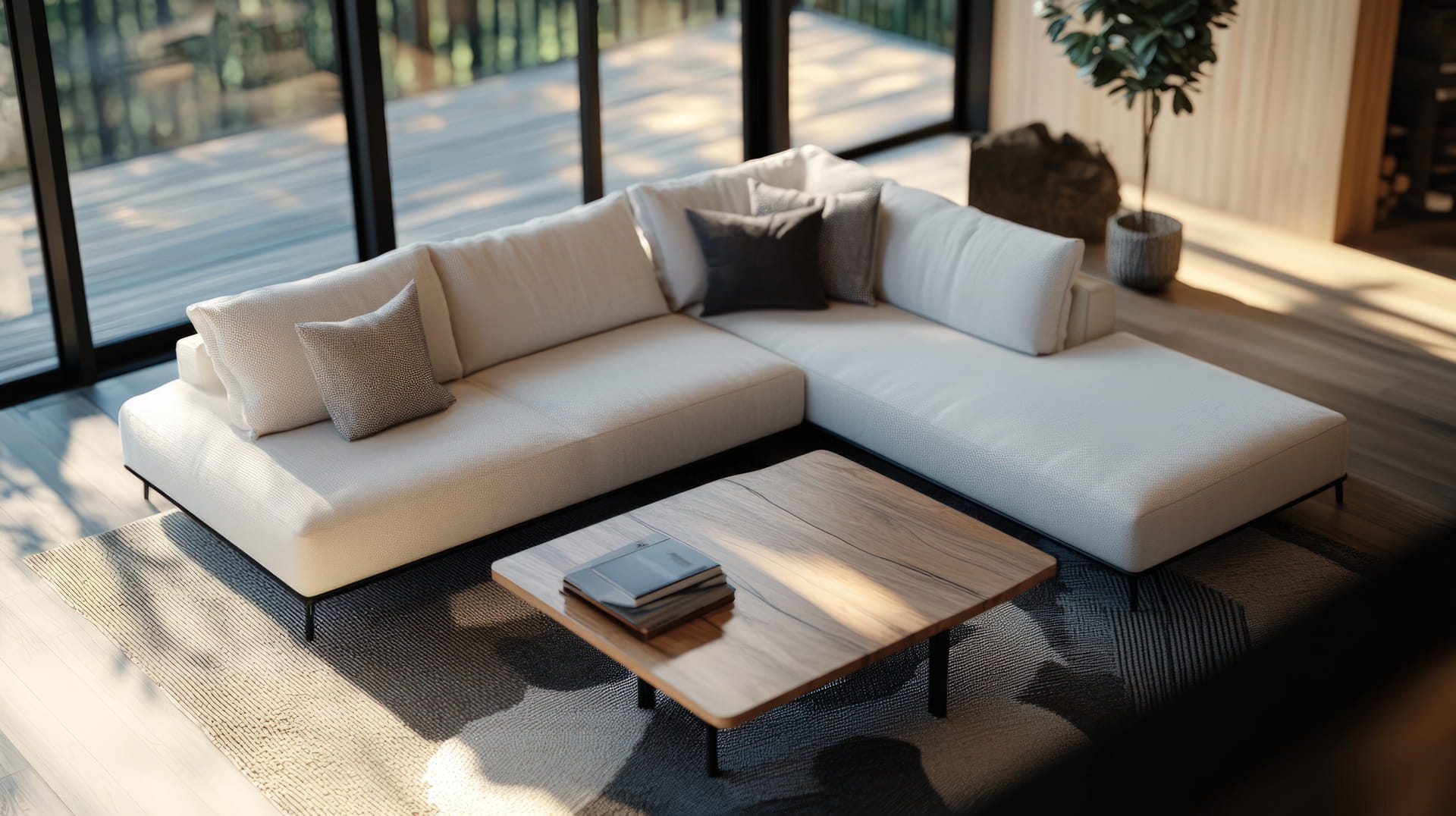
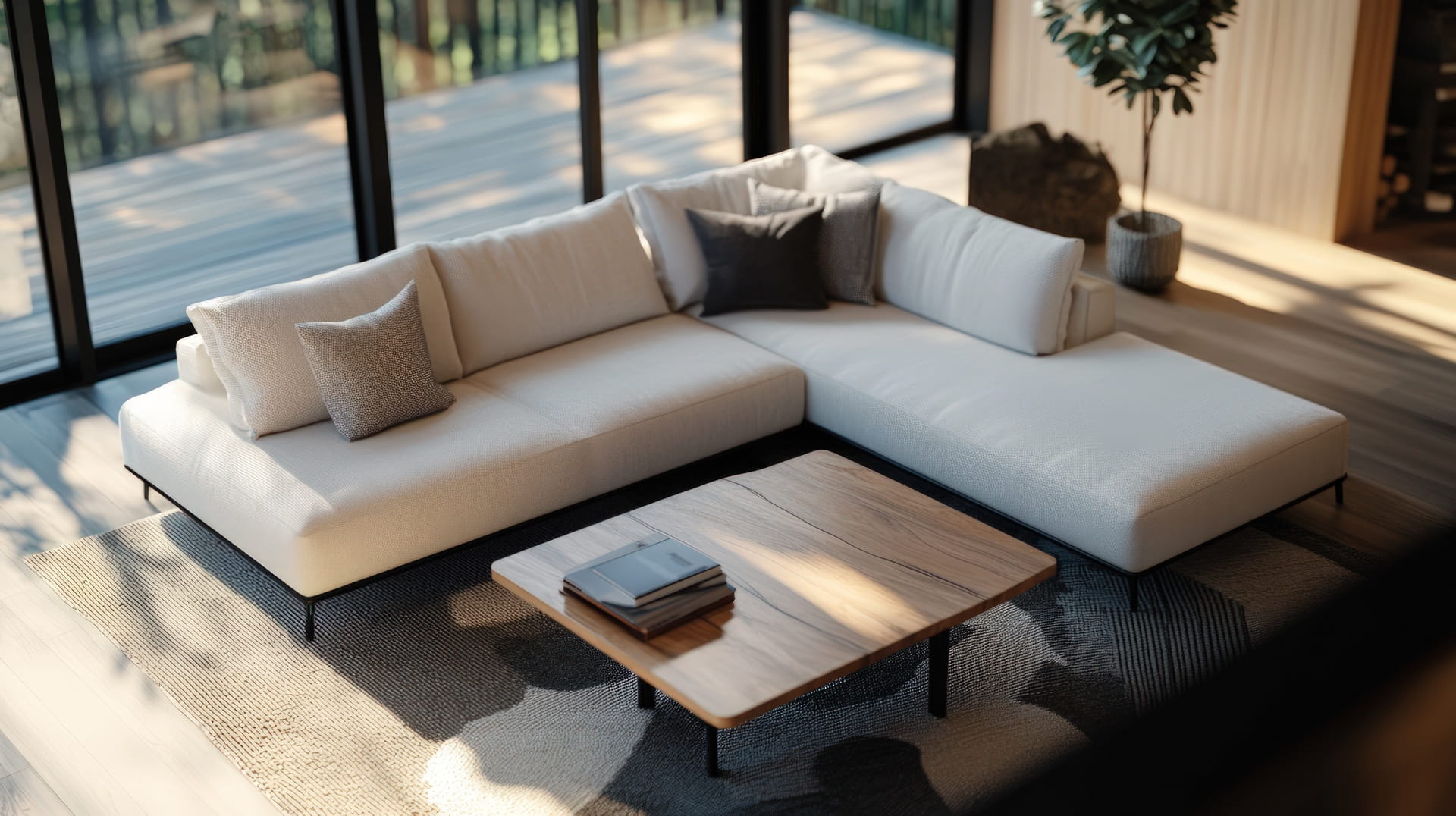
The L-shape is the workhorse. It tucks neatly into a corner, leaves the rest of the room open, and creates a natural conversation area without closing anything off. For North Georgia homes where the living area connects directly to a back porch or sunroom, an L-shape lets you maintain that visual openness while still feeling like a defined, cozy space. It also tends to handle traffic flow better. Guests can pass around it without the room feeling congested.
The U-shape is for the gathering household. If you're the family that hosts every game day, Thanksgiving, and neighborhood cookout, a U-shape creates a real destination. It seats more people, encourages face-to-face conversation, and makes the sectional the room's unmistakable focal point. The trade-off is footprint. A U-shape needs significant square footage to breathe, and in a mid-size open plan, it can read as a blockade rather than an invitation.
A good rule of thumb: if your living zone is under about 300 square feet, go L-shape. If it's larger and social entertaining is central to your life, the U-shape can be spectacular.
Chaise Placement: Left, Right, and Why It Matters More Than You Think
The direction your chaise faces is one of the most overlooked decisions in sectional shopping, and it directly affects how your open floor plan functions.
In an open concept layout, the chaise typically should face toward the interior of the room rather than pointing toward a doorway or hallway. If it blocks a natural walking path, every person who enters the room will either have to walk around the entire sectional or awkwardly step over it.
Think about where people enter your living area most often. Is it from the kitchen side? The front entryway? The back door after coming in from the patio? Position the chaise so it faces that flow, not fights it.
The "Does It Float?" Question
In a closed living room, sofas go against walls. In an open floor plan, a sectional often needs to float, meaning no wall behind it at all.
This is actually a great opportunity. A floating sectional, paired with a well-chosen area rug underneath, does something architectural. It draws a room within a room, giving the living zone its own identity inside the larger open space. Without a rug to anchor it, a floating sectional can look like it drifted there by accident.
If you're going this route, look for sectionals with a finished back. Some pieces are designed to be seen from all sides. Others have a raw, unfinished back panel meant to sit flush against a wall. That distinction matters enormously in an open floor plan.
Don't Forget What the Rest of the Room Is Doing
The sectional doesn't exist in isolation. In an open floor plan, living room furniture is always in conversation with the dining table, the kitchen cabinetry, and any accent pieces in the adjacent zones.
If your dining set is large and dark, a massive sectional in a heavy fabric can make the whole space feel dense. A more streamlined sectional in a lighter upholstery creates balance. Scale and material weight work together. Pay attention to both.
Custom Is Your Best Friend in an Unusual Space
Not every open floor plan is a rectangle. Many North Georgia homes have angled walls, breakfast bar overhangs that cut into the living zone, or transitions between tile and hardwood that suggest where furniture should go. When the space has quirks, an off-the-shelf sectional can feel like it almost fits rather than perfectly fits. Custom furniture solves this by giving you the exact configuration, upholstery, and chaise orientation your space actually needs.
Find Your Fit at Furniture of Dalton
Serving North Georgia and Chattanooga, Furniture of Dalton is the furniture retailer locals trust for living room furniture that truly works in their homes. Stop by our Dalton showroom or contact us to talk through your space with one of our furniture experts.
-
RUG DEALS BLOOMING NOW
April 01 2026 -
-
-

-