Solid Wood vs. 'Wood' Furniture: Explained Simply
Furniture shopping has a way of raising a question that sounds simple until you start reading the fine print. Two dressers can sit side by side, look almost identical, and carry very different tags. One says solid wood. The other simply says wood, and that one small gap in wording covers a lot of ground.
We at Furniture of Dalton have spent years helping families across North Georgia and Tennessee work through this exact question, from Chattanooga down through Calhoun, Cartersville, Kennesaw, and Atlanta. Our showroom in Dalton, GA lets you open drawers, run a hand along an edge, and see how each material behaves in person. Once you know what to look for, the decision becomes a comfortable one.
What the Word "Wood" Actually Covers
Solid wood means the piece is built from boards milled straight from a tree, the same material all the way through. Everything else in the wood family starts with a core and adds a wood surface on top of it. Both approaches show up across bedroom furniture and dining collections, often within the very same set.
The difference is less about ranking one above the other and more about matching. Each construction method has a place where it performs beautifully, and the real skill is putting the right one in the right spot. Knowing the vocabulary puts you in charge of that choice.
Solid Wood, Veneer, and Engineered Wood Side by Side
Most furniture on any showroom floor falls into one of three construction families. Here is how they compare when you set them next to each other.
· Solid wood: Milled from natural boards, so the grain runs all the way through. It can be sanded and refinished for generations, carries real weight, and shifts slightly with humidity as the seasons change.
· Wood veneer: A thin slice of genuine hardwood bonded to a stable core. The surface is real wood with real grain, and the core keeps wide panels flat and true over time.
· Engineered wood: Wood fibers compressed with binders into a dense, uniform panel, then finished. It stays dimensionally consistent, resists warping, and helps keep larger pieces within reach.
Where Each Material Earns Its Place
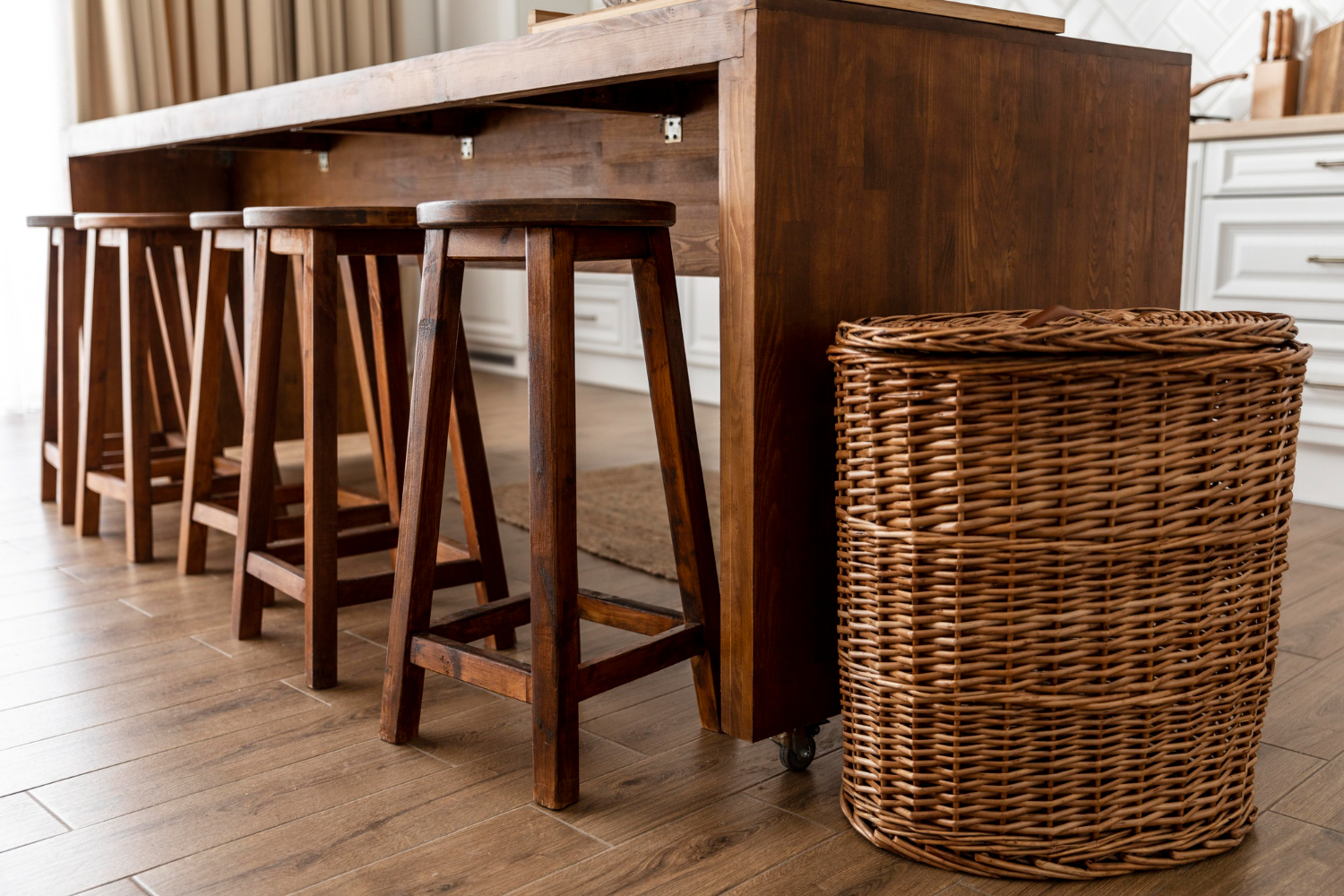
Dining room furniture takes more daily contact than almost anything else in a house, which is why solid wood tops, legs, and stretchers are so common there. A table that gets sanded and restained twice in fifty years is a table your grandchildren will eat at.
Wide surfaces tell a different story. A six-foot headboard panel or a tall cabinet door made entirely of solid boards will move with Georgia humidity, and veneer over a stable core holds a flat, even face year after year. That is also why custom furniture frequently blends the two, pairing solid frames with veneered surfaces to get both strength and stability.
Engineered panels earn their keep in the places you rarely see. Drawer bottoms, case backs, and interior shelving stay quiet, stable, and light, which keeps a large piece manageable when it comes time to move it.
How to Read a Piece Up Close
Start at the edges. On solid wood, the grain on the top surface continues around the edge and matches. On a veneered panel, the edge is usually banded, and the top grain stops where the band begins.
Then lift a corner and open a drawer. Solid wood has a density you can feel, and drawer boxes with dovetail joints signal that the maker cared about the parts nobody photographs. Asking a salesperson what the core is made from is a fair question, and a good one will answer it happily.
Get in Touch With Our Furniture Experts
Still weighing a solid oak table against a beautifully veneered one? Our furniture experts can walk you through the construction of any piece on the floor, explain what is under the finish, and help you match the material to how your family actually lives. Contact us and we will make sure you know exactly what you are bringing home.
-

-
-
How Long Should a Mattress Really Last?
August 17 2026 -
What Nobody Tells You About Buying a Reclining Sofa
August 11 2026 -